A response, not a creation
The pearl is not made by the oyster: it is first endured, then transformed. A grain of sand, a fragment of shell, sometimes a micro-organism enters the mollusc. The animal, unable to expel it, wraps it instead. Layer after layer, it deposits a mineral substance around the foreign body — nacre, composed of calcium carbonate and conchiolin.
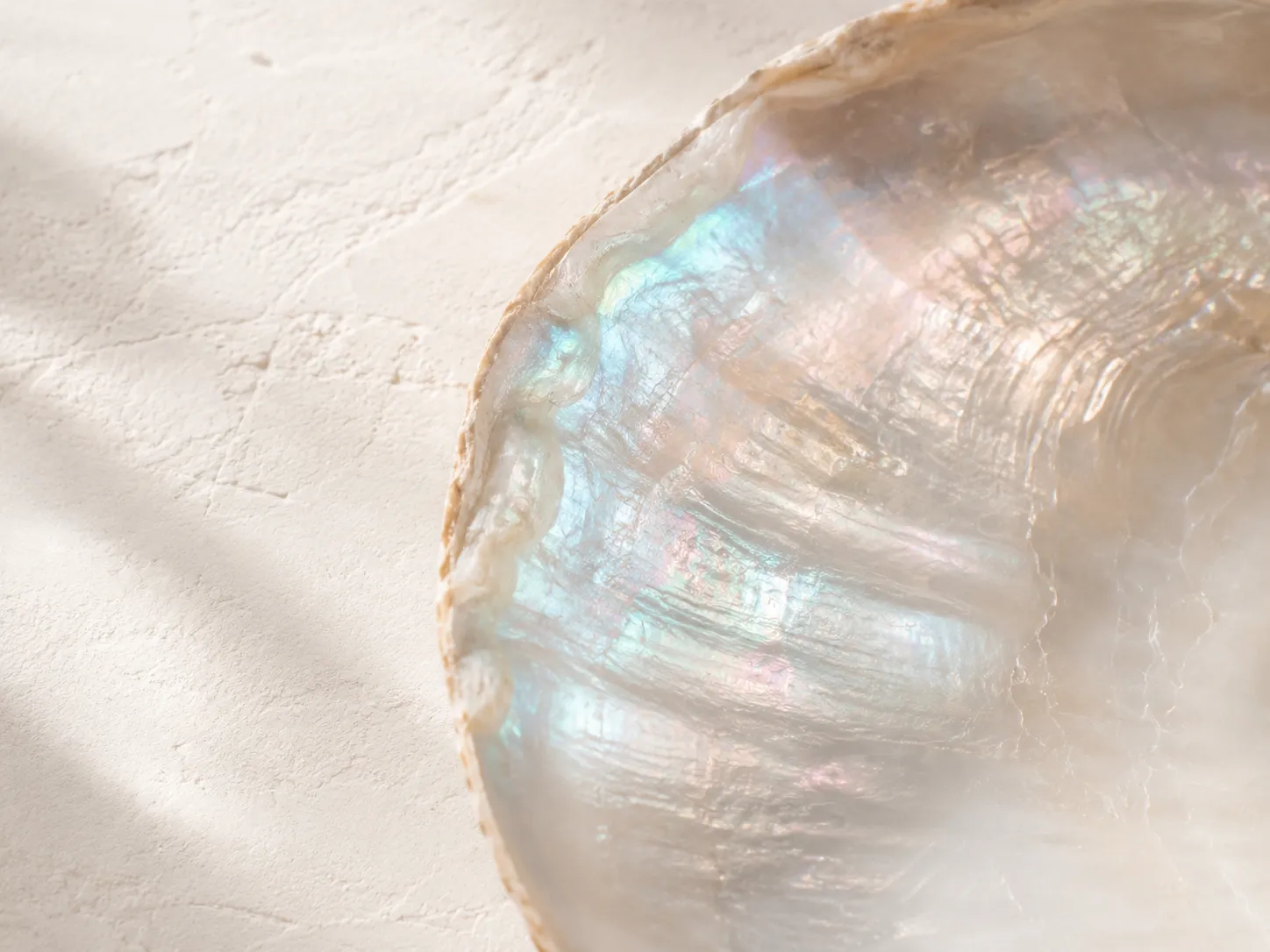
This gesture takes years. Each layer refines the roundness, adds a reflection, deepens the light the pearl returns. The characteristic iridescence — that orient which shifts with the angle — comes from the very structure of nacre: microscopic platelets that diffract light.
Natural pearls, cultured pearls
Fully natural pearls are rare. Most oysters produce nothing, and among those that do, few yield a usable pearl. This is what long made pearls more precious than cut stones.
At the beginning of the twentieth century, a Japanese man named Kōkichi Mikimoto managed to deliberately trigger the process by introducing a nucleus into the oyster. The cultured pearl was born. It is not synthetic — the nacre is produced by the animal — but the trigger is human. Today, almost every pearl we know is cultured, from the seas of Japan to the freshwater lakes of China, from Tahiti to Australia.
What we select
For the Pearl Code collection, we select freshwater and saltwater cultured pearls, sorted for their regular shape, depth of lustre, and fineness of orient. Each batch is evaluated by touch and by light. Imperfect forms — baroque or teardrop — are kept for pieces that make them a deliberate choice.
An object born slowly
A pearl cannot be rushed. It takes the time to become what it is — and perhaps that is why it crosses eras so well. Nothing in a well-worn pearl feels dated, because it never sought to belong to a moment.
by Laurent Laracca