A seed, a tree, an altitude
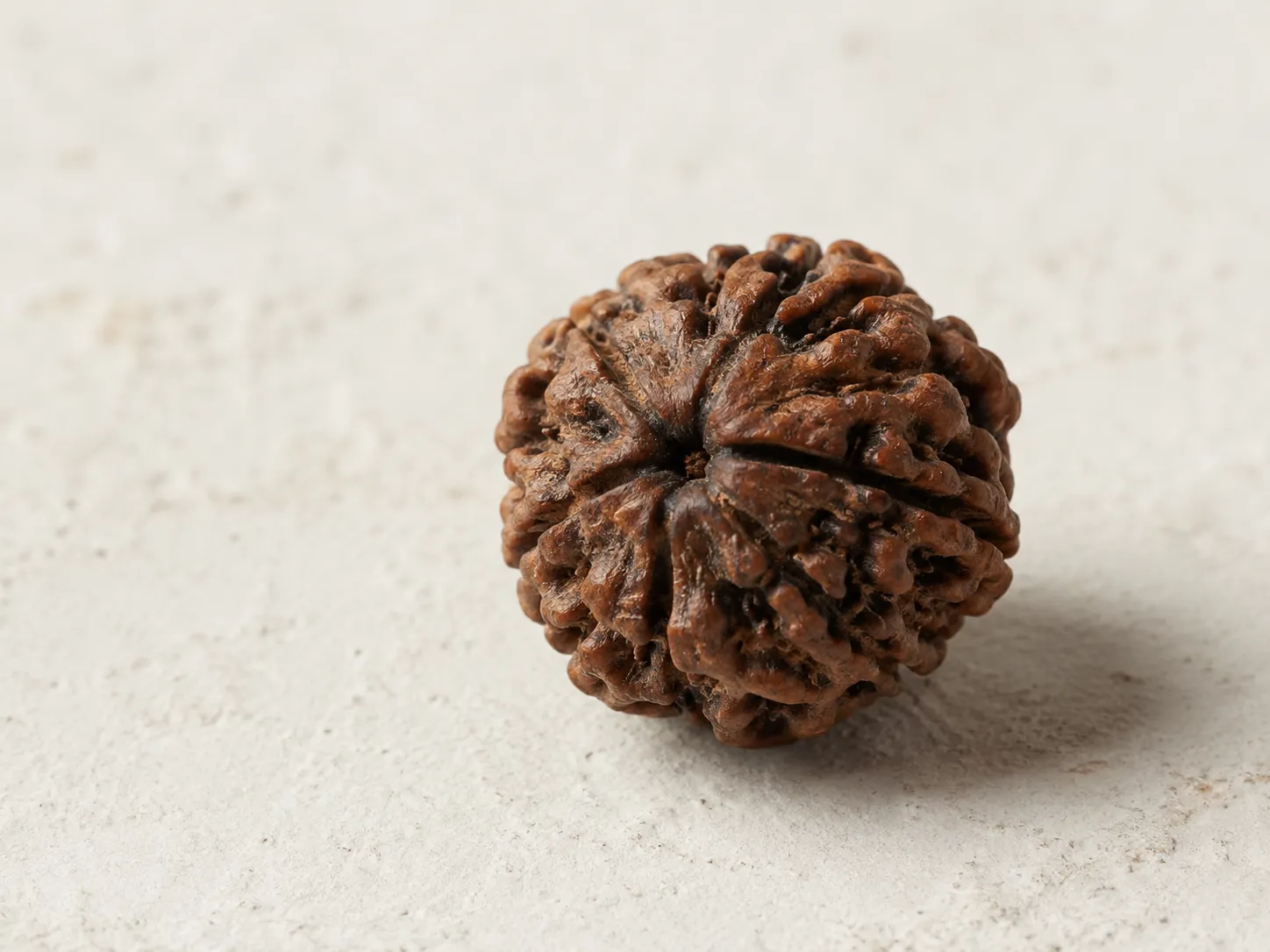
The Rudraksha is the seed of a tropical tree, Elaeocarpus ganitrus, which grows in the mountainous regions of India, Nepal, Indonesia, and a few Pacific islands. The tree can reach twenty metres. Its fruit — deep blue when ripe — contains a single seed: rough, dense, crossed by natural ridges.
These ridges have a name: mukhi. Each seed bears a certain number of them, from one to twenty-one, carved by the fruit's own growth. The most common have five mukhis — the rarest have only one.
An ancient presence
References to the seed appear in Sanskrit texts more than three thousand years ago. In Indian tradition it is associated with Shiva — a figure of detachment, of clarity, of beginning again.
Malas, strings of 108 beads used for meditation and recitation, have long made it a familiar object. They are worn at the neck, at the wrists, sometimes discreetly under clothing. Repeated contact with the skin gives the seed a dark, almost waxy patina that deepens the grain over the years.
The act of choosing
Not all seeds are equal. A good Rudraksha is heavy for its size, free of deep cracks, with a regular grain. It is selected by hand, sorted, carefully drilled — the material is hard, but the core can split if the pressure is wrong.
At Laracca, every seed is assessed before assembly: density, clarity of the ridges, natural patina. Pieces that don't pass are set aside.
Worn every day
On the wrist, the Rudraksha has a rare quality: it lets itself be forgotten. Its weight is just right, its texture answers the touch, its colour pairs with most skin tones. It asks for nothing. It is simply there.
This is what we look for in an object worn every day — not a piece of jewellery that imposes its presence, but a material that accompanies.
by Laurent Laracca